
About Us
Features
Pricing
Contact Us
Blogs
Login
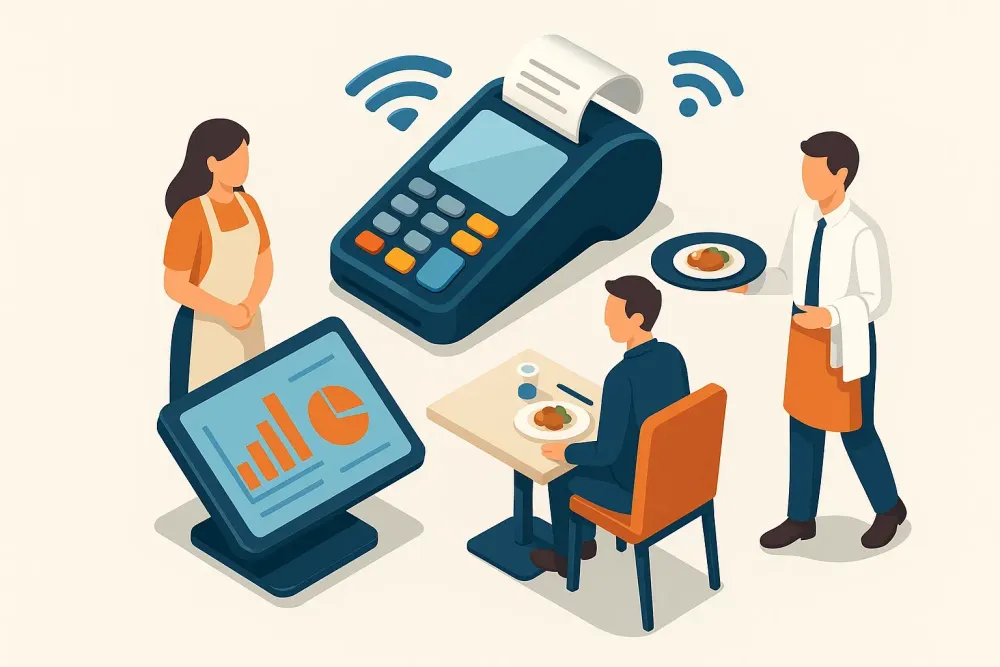
Optimizing Restaurant Operations: A Comprehensive Guide to POS Systems – Advantages and Disadvantages
Many restaurants struggle with slow service, costly errors, and dissatisfied customers. A Point of Sale (POS) system offers a powerful solution to streamline operations, improve efficiency, and boost profitability. This comprehensive guide delves into the significant advantages and disadvantages of implementing a POS system in your restaurant, helping you make an informed decision.
Advantages of POS Systems in Restaurants
A well-integrated POS system significantly enhances various aspects of restaurant management, leading to smoother operations and improved customer satisfaction.
1. Accelerated Order Processing:
Slow service directly impacts revenue. POS systems eliminate delays by routing orders directly from the point of entry (counter or table) to the kitchen via display or printer. This eliminates the need for handwritten tickets and the associated errors and delays, resulting in faster service and happier customers. The streamlined order process minimizes double entry, keeps order flow consistent during peak hours, and allows staff to focus on guest service rather than error correction. Ultimately, faster service translates to increased table turnover and higher sales.
2. Enhanced Accuracy:
Manual order taking is prone to errors. POS systems eliminate this risk by digitally capturing and transmitting order details to the kitchen, ensuring accuracy in every order. This reduces incorrect dishes, returns, and complimentary meals, leading to cost savings and improved customer satisfaction. The shared digital system minimizes miscommunication between front-of-house and back-of-house staff, promoting a smoother workflow. Improved accuracy leads to happier customers, less waste, and better operational efficiency.
3. Elevated Customer Experience:
Efficient service significantly impacts the customer experience. POS systems facilitate prompt order fulfillment and accurate billing, leading to faster table turnover and enhanced customer satisfaction. Tableside ordering enables staff to remain attentive and reduces interruptions caused by manual ticket handling. Clear menus, precise order entry, and swift payment processing contribute to a positive dining experience, increasing customer loyalty and repeat business.
4. Real-Time Data-Driven Insights:
Real-time reporting empowers data-driven decision-making. A POS system provides immediate access to KPIs such as hourly sales, best-selling items, and underperforming menu items. Managers can make real-time adjustments to staffing levels or promotions and capitalize on trends. Data-driven insights replace guesswork, maximizing efficiency and profitability.
5. Simplified Staff Management:
POS systems streamline staff management through automated time tracking, reducing manual errors. Detailed shift reports offer insights into attendance, overtime, and labor costs. Managers can allocate resources more effectively and spend less time on administrative tasks. Efficient scheduling and accurate time logs contribute to optimized labor costs and smoother operations.
6. Customization for Diverse Service Models:
POS systems adapt to various restaurant formats—quick service, dine-in, takeout, or delivery. Customizable features align with existing workflows without disrupting operations. This flexibility ensures consistent and efficient service across all models.
7. Mobile and Cloud Accessibility:
Cloud-based POS systems provide real-time access to key operational data from any device. Managers can monitor performance, review trends, and respond quickly to challenges—even when not physically present. This also improves shift transitions by enabling incoming staff to review prior shift data. Always-on connectivity ensures preparedness and operational agility.
8. Centralized Multi-Location Management:
For multi-location restaurants, centralized POS systems simplify management significantly. Menu updates, pricing changes, and promotions can be deployed across all branches from a single dashboard. Consolidated reporting gives clear visibility across locations, improving strategic planning and administrative efficiency.
Disadvantages of POS Systems in Restaurants
While the advantages are compelling, it's important to acknowledge the potential drawbacks before implementation.
1. Initial Investment Costs:
POS systems involve upfront costs, including hardware, setup, installation, and training. SaaS-based models offer subscriptions but may incur significant total ownership costs over time. Transparent pricing and detailed cost breakdowns are crucial for accurate budgeting.
2. Staff Training Requirements:
Adopting a new system requires training and adaptation. Some employees may struggle initially, leading to temporary slowdowns and increased oversight. Training during off-peak hours, step-by-step learning, and accessible support materials help minimize disruption.
3. System Downtime and its Impact:
Downtime caused by hardware failures, internet issues, or software glitches can severely affect operations—especially during peak hours. Offline capabilities, backup power sources, and contingency planning are essential to mitigate operational risks.
4. Recurring Subscription Fees:
Most POS systems involve ongoing subscription fees for software access, updates, and support. Costs may increase as feature requirements grow. Careful evaluation of plan inclusions and hidden charges (e.g., payment processing fees) is vital for sustainable budgeting.
Conclusion
The decision to implement a POS system requires evaluating both benefits and challenges. Enhanced accuracy, efficiency, and data insights significantly improve restaurant operations—but initial investment, training, and potential downtime must be considered. A thorough analysis of ROI against costs will help determine whether a POS system aligns with your restaurant’s goals.
PREST offers tailored IT solutions to streamline restaurant operations, improving efficiency and profitability. Let us help transform your restaurant into a smarter, faster, and more profitable business.
See More


© 2025, PREST, Inc. All rights reserved. | Designed in 🇮🇳 
Crafted by 