
About Us
Features
Pricing
Contact Us
Blogs
Login
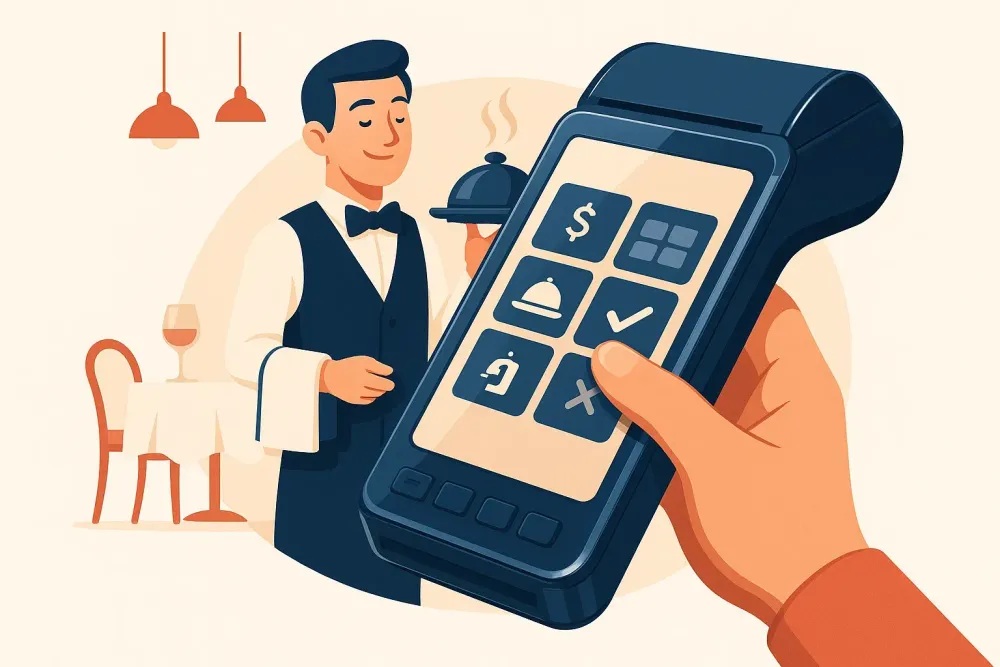
Streamlining Restaurant Operations: The Definitive Guide to Handheld POS Systems
A handheld POS system could be the solution your restaurant needs. These compact, portable devices are revolutionizing the food service industry, boosting efficiency and significantly enhancing the customer experience. Their speed and accuracy streamline operations, ensuring every order is delivered promptly and correctly. This comprehensive guide delves into the advantages of handheld restaurant POS systems, addressing common challenges like miscommunication and illegible handwritten orders. We'll explore the various types of portable POS systems, their seamless integration into existing operations, and the crucial factors to consider when choosing the right system for your restaurant.
Ready to optimize your restaurant's efficiency and create exceptional customer experiences? Let's explore the world of handheld POS systems.
What are Handheld POS Systems for Restaurants?
Handheld POS systems are compact, wireless devices enabling restaurant staff to manage orders and process payments directly at the table. Unlike traditional, stationary POS systems, these portable tools offer unparalleled flexibility, fostering more fluid customer interactions and personalized service. They typically integrate all the functionalities of a full-scale POS system – order management, payment processing, and receipt printing – in a device easily held in one hand.
The Need for Handheld POS Systems in Modern Restaurants
In today's fast-paced, technology-driven world, the demand for quick and convenient service in the dining industry is paramount. To meet these expectations, handheld POS systems have become indispensable tools for restaurants aiming to improve service efficiency and customer satisfaction. Here's why they are crucial:
- Enhanced Efficiency: Streamlines order processing, reducing the time it takes to input and transmit orders to the kitchen.
- Improved Accuracy: Eliminates errors caused by miscommunication or poor handwriting.
- Mobility and Flexibility: Servers can move freely and attend to customers more effectively.
- Valuable Data Insights: Provides insights on customer preferences, peak times, and popular menu items.
- Reduced Costs: Fewer errors and optimized workflows lead to cost savings and increased profitability.
How Handheld POS Systems Work
When a customer places an order, the server inputs the details into the handheld device, which instantly syncs with the central POS system. Kitchen staff receive orders without delay, improving accuracy and service speed.
These devices also offer built-in scanners and receipt printers, enabling secure and fast payments at the table — including credit cards and NFC payments (Apple Pay, Google Pay, etc.), improving table turnover and boosting tips through easy selection options.
To work effectively, handheld POS systems typically integrate with your central POS and restaurant management software, ensuring inventory, menu items, and customer data are synchronized.
Types of Handheld POS Devices
1. Tablet-Based POS Systems
Lightweight tablets or iPads with POS software, offering easy mobility and customization.
2. Handheld Terminal POS Systems
More compact but feature-rich, often providing built-in printers and card readers for a complete tableside solution — ideal for high-volume restaurants.
Advantages of Handheld POS Systems
- Faster Service
- Improved Order Accuracy
- Enhanced Customer Experience
- Data-Driven Decisions
- Cost Savings & Profit Boost
Choosing the Right Handheld POS System
Key factors to consider:
- User-Friendly Interface
- Customizable Features
- Strong Security
- Total Cost (hardware + software)
- Support & Regular Updates
- Portability & Durability
- Built-in scanners/printers
- WiFi & Offline mode
- Seamless integration with existing POS
- Reliability in a busy restaurant environment
The Best Handheld POS System for Restaurants: PREST POS Handheld
When choosing a handheld POS system, you need a solution that meets today’s needs and scales with your future growth. The PREST POS Handheld is designed to do exactly that.
Key Highlights:
- Powerful & Portable: Operates comfortably in one hand.
- Built-in Scanner & Receipt Printer
- Large Touch Screen with digital signature support
- Real-Time Wi-Fi Connectivity
- Boosts Table Turnover & Tips
- Reduces Payment Disputes with stored digital signatures
- Restaurant-Grade Durability
PREST POS Handheld integrates effortlessly with your existing operations, boosting service speed, accuracy, and customer satisfaction. It’s the perfect tool for driving growth and profitability.
Future Trends in Handheld POS Systems
The future includes POS systems enhanced by:
- AI & Machine Learning for predicting customer preferences
- Biometric authentication
- Advanced contactless payments
- Deeper analytics for inventory and staffing
Staying updated with these innovations ensures competitive advantage.
Conclusion
In today’s competitive restaurant landscape, staying ahead is crucial. Handheld POS systems offer a transformative solution, enhancing operational efficiency and customer satisfaction. Investing in the right system can significantly improve profitability and build customer loyalty.
Want to revolutionize your restaurant operations? Contact PREST today to discover the ideal handheld POS solution for your business.
Frequently Asked Questions About Handheld POS Systems
What is the best POS for fast-food restaurants?
PREST POS offers self-ordering and fast checkout features tailored for quick-service setups.
What are the four types of POS systems?
Traditional, cloud-based, mobile, and tablet POS systems.
What system do most restaurants use?
Restaurant POS systems with integrated ordering, payment, and reporting features.
What is the difference between POS and POS system?
POS is the transaction point; a POS system includes both hardware and software.
Why is POS better than a cash register?
Because it offers speed, inventory automation, detailed analytics, customer data, and security.
Do I need a POS system for my restaurant?
Absolutely — it streamlines operations, reduces errors, improves service, and boosts profitability.
See More


© 2025, PREST, Inc. All rights reserved. | Designed in 🇮🇳 
Crafted by 